
Declining print runs, increasing product variety, and ever-shorter lead times are fundamentally changing the demands placed on the printing industry. Whether in commercial printing, packaging, or label production, economic success today increasingly depends on intelligently combining different printing technologies, such as offset and digital printing, and automatically managing jobs throughout the entire process chain. With the new Prinect Touch Free Workflow, Heidelberger Druckmaschinen AG (HEIDELBERG) is taking the hybrid production approach to the next level.
Just a few years ago, a print shop’s performance depended primarily on the printing and finishing presses it used. Now, the focus is increasingly shifting to the processes between individual solutions and machines. While modern printing systems are becoming ever more productive, the complexity of production is growing at the same time. Smaller print runs, frequent job changes, personalized and customized products, and increasing time pressure mean that traditional production workflows are increasingly reaching their limits.
Added to this are labor shortages and rising labor costs. This is forcing companies to standardize and automate their processes as much as possible. For productivity, print speed is therefore only one parameter; what is crucial, however, is moving jobs efficiently, error-free, and without unnecessary intervention through the entire production process. “The solution lies in the consistent end-to-end automation of the entire production process, which intelligently controls complex processes, makes decisions autonomously, and thus makes the print shop more profitable,” explains Dr. Frank Schaum, Head of the Digital Print Ecosystem Business Unit at HEIDELBERG, describing the current situation.
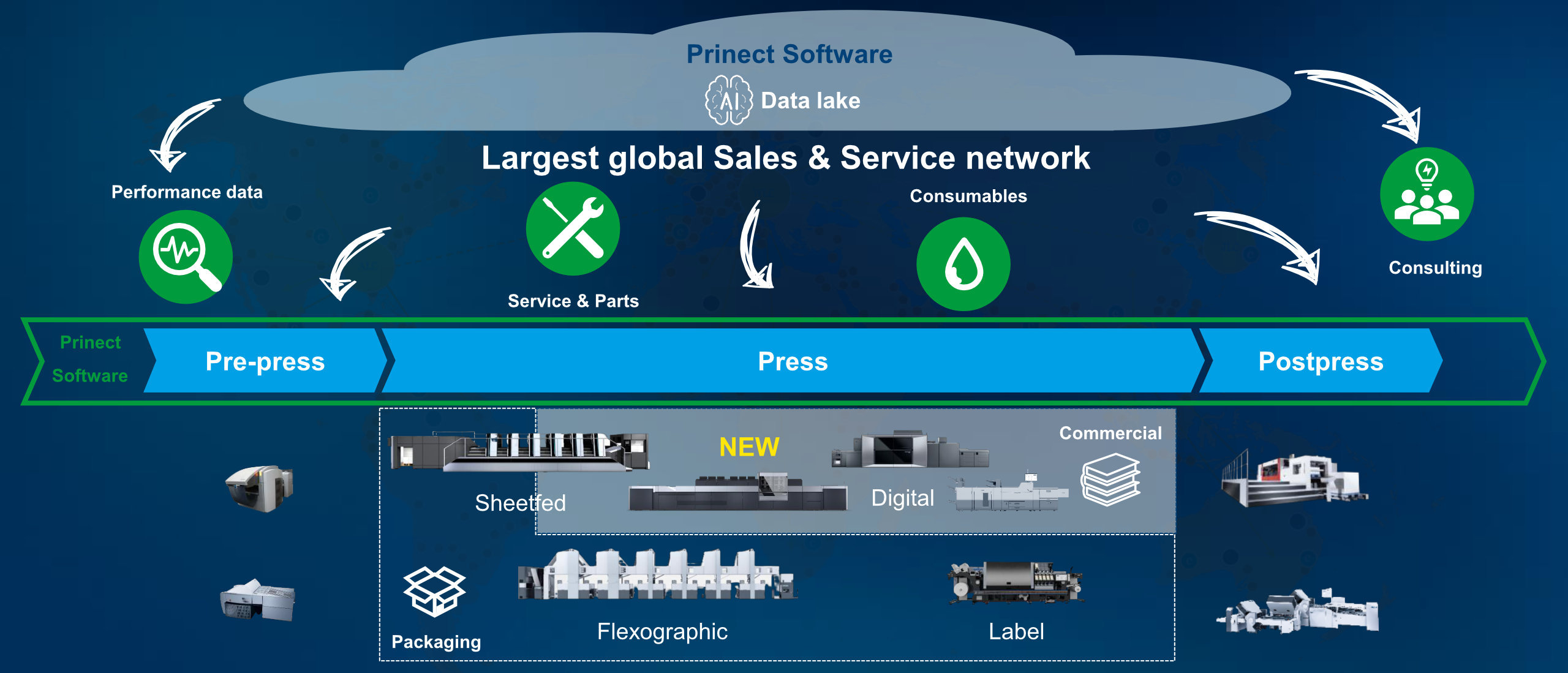
Hybrid production environments provide greater flexibility and higher efficiency, offering print shops a viable economic outlook for the future.
The term “hybrid production” is often reduced to the mere combination of offset and digital printing. In fact, however, it describes a much more comprehensive approach. Hybrid production environments integrate prepress, offset printing, digital printing, finishing, logistics, and management systems into a seamless end-to-end solution. The goal is to automatically determine the most cost-effective production path for each job—regardless of which presses it is ultimately produced on.
For the end customer, the printing process used is of little consequence. What matters most are product quality, delivery time, sustainability, and total costs. This is precisely what gives rise to a new challenge for workflow systems: they must make data-driven production decisions while taking all available resources into account. With Prinect Touch Free, HEIDELBERG offers a workflow solution that goes far beyond traditional automation. Prinect Touch Free not only controls the individual process steps but also coordinates the entire production process—from order receipt to shipping. In doing so, Prinect Touch Free combines offset and digital printing in a seamless hybrid workflow and ensures maximum efficiency with minimal manual effort.
The greatest efficiency gains come from integrating the entire value chain. Media breaks cost time and increase the likelihood of errors.
Jobs should be automatically assigned to the most cost-effective production route based on defined rules.
The more standardized production processes are, the easier they are to automate. Custom solutions often slow down hybrid workflows.
Modern workflow systems provide detailed production data. This data forms the basis for informed decisions regarding capacity utilization, costs, and investments.
The success of hybrid production concepts does not depend solely on technology. Employee training, acceptance, and understanding of the processes are critical success factors.
In many print shops, production planning is still often done manually. Production managers rely on experience to decide whether a job should be produced using offset or digital printing. Due to the increasing complexity of production, this approach is no longer appropriate. Today, the real bottleneck lies less in the individual machines than in the coordination of all production steps. This is exactly where the Prinect Touch Free workflow system comes in, largely automating production planning. Prinect Touch Free analyzes each job based on various parameters such as print run size, area coverage, ink consumption, delivery date, substrate, available machine capacity, and post-press processing. Based on this data, Prinect Touch Free calculates the most cost-effective production route and automatically guides the job through the entire process chain.
This represents a significant difference from traditional workflow systems, which merely manage production data. Prinect Touch Free goes a step further: using AI, it independently makes decisions—based on the order backlog and real-time data from the print shop’s production—regarding the optimal and most cost-effective production sequence to meet the desired delivery date. This approach unlocks considerable potential, particularly in hybrid production environments. Offset and digital printing do not compete with each other but are optimally combined depending on the specific requirements.
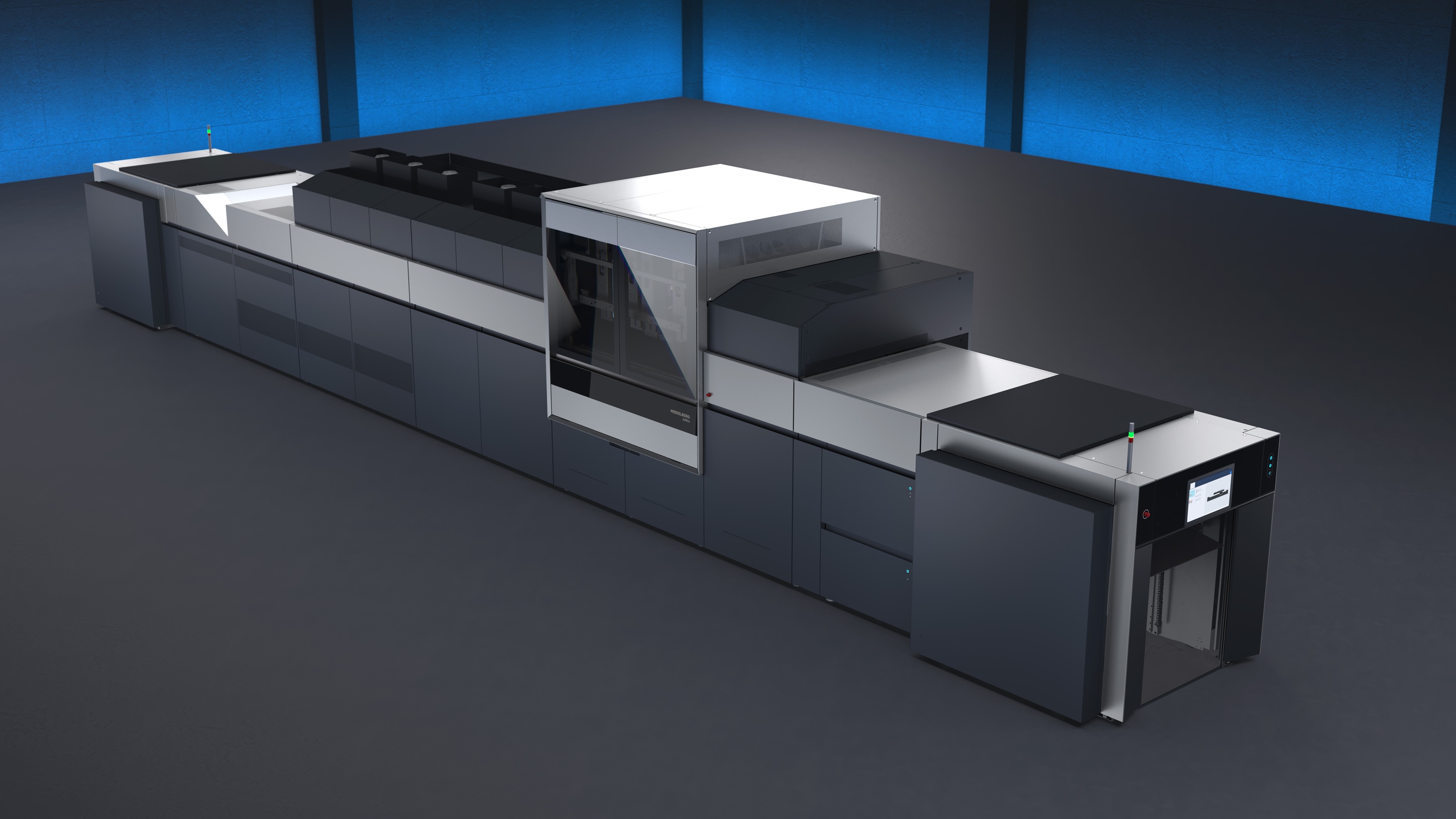
With the Jetfire 50, HEIDELBERG offers a solution for industrial digital printing that can be seamlessly integrated via Prinect Touch Free into a highly efficient hybrid production environment that includes offset printing.
The economic benefits of hybrid production concepts extend far beyond higher utilization of the printing press fleet. Automated, AI-supported job control significantly reduces the need for manual intervention. At the same time, turnaround times are shortened as jobs are routed through production without unnecessary delays. Production capacities can be planned more transparently and utilized more effectively. Employees are relieved of routine tasks and can focus on more skilled activities. Standardized and automated processes reduce dependence on the individual expertise of specific employees while simultaneously increasing process reliability. Furthermore, Prinect Touch Free provides real-time production data, thereby creating a solid foundation for decisions regarding capacity utilization, process optimization, and future investments.
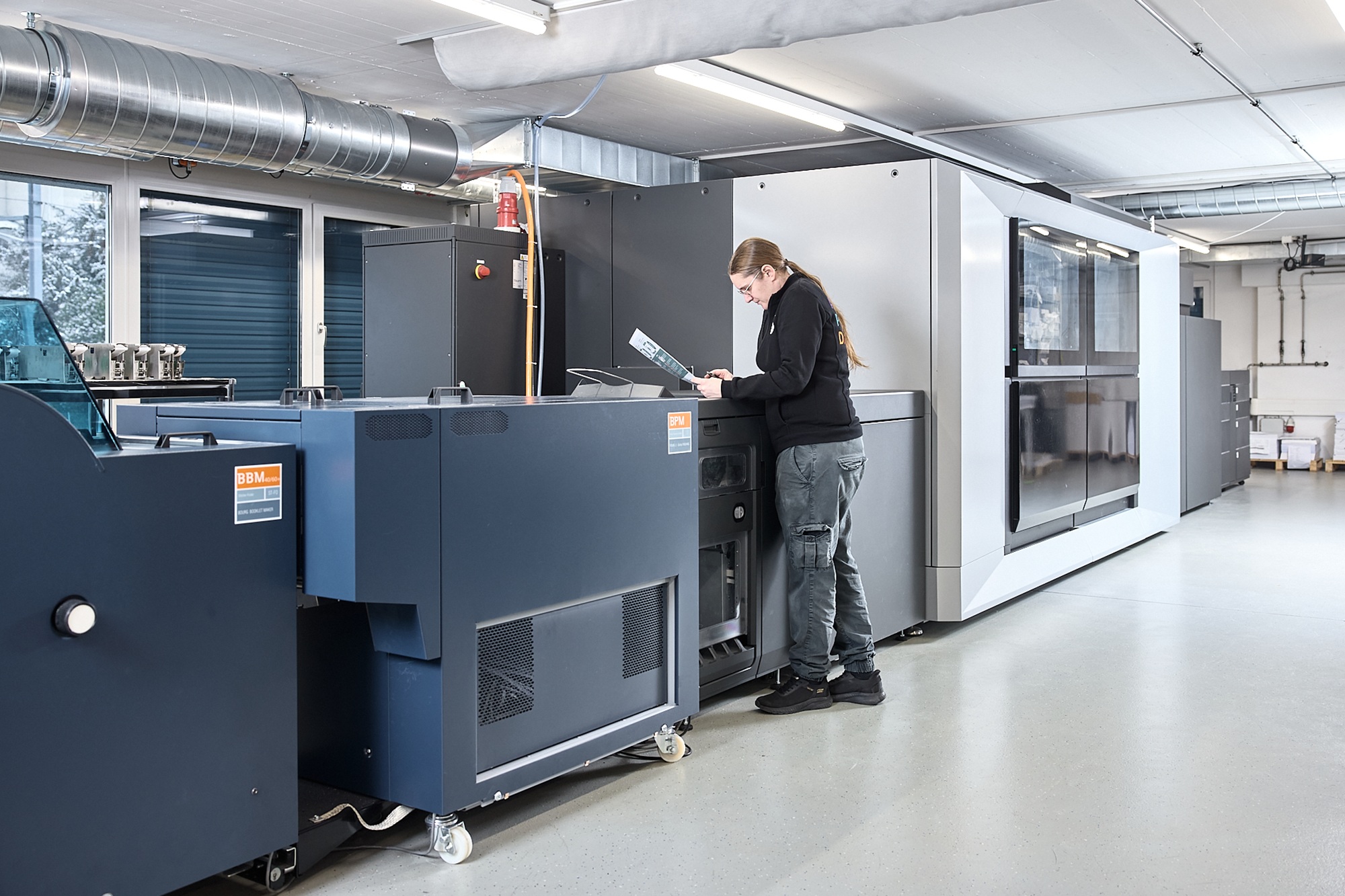
In digital printing, HEIDELBERG is further expanding its portfolio—particularly in inkjet printing—with the Jetfire 50 for the B3+ format and the Jetfire 75 for the B2+ format, thereby raising the industrial standard of digital printing even higher.
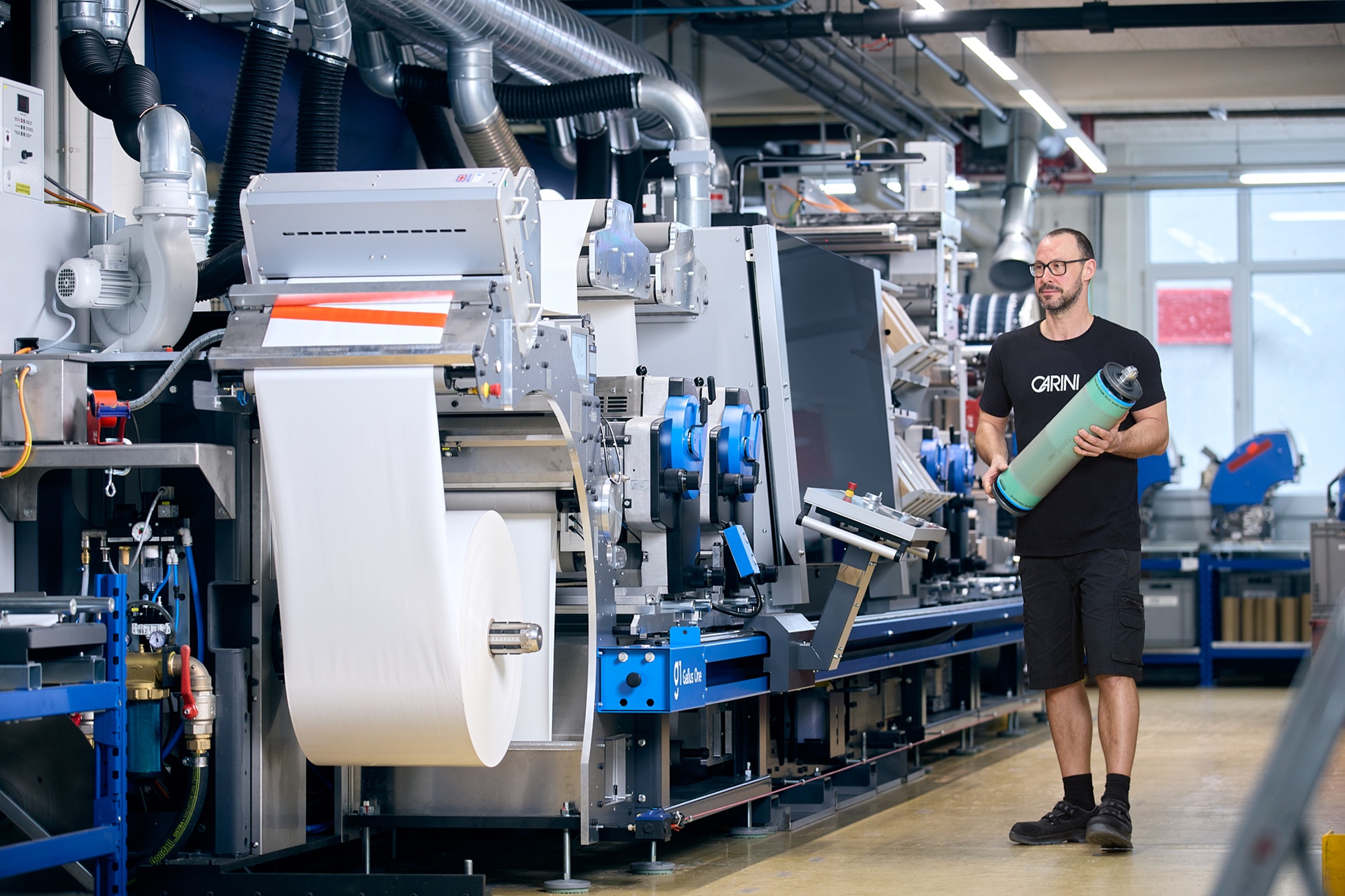
The topic of hybrid production also plays a significant role for HEIDELBERG in the growing label market. There, Gallus offers a corresponding solution with its “System to Compose” concept, in which digital inkjet printing and conventional flexographic printing, as seen here on a Gallus One, can be combined in a single system on a modular basis according to customer needs.
Technically, Prinect Touch Free is based on an intelligent combination of cloud technology and AI-powered process control. HEIDELBERG has developed three modules for this purpose: As the central app, “Orders” visualizes incoming jobs. Here, PDF files are verified and checked for printability via preflight. At this stage, employees can track progress and intervene if necessary. Otherwise, “Pathfinder” determines the technically and economically optimal production path for all pending jobs, taking all available production options into account. The “Auto Scheduler” ensures continuous adjustment of the production schedule. If the press status changes, the schedule is automatically adjusted. This keeps production flexible and efficient at all times.
“Our Prinect Touch Free Workflow shows the direction in which modern workflow systems are evolving: away from pure process management toward intelligent orchestration of the entire print production process. Anyone who wants to remain competitive in the future will therefore have to invest not only in machines, but above all in end-to-end, automated, and open production processes,” emphasizes Dr. Frank Schaum.
HEIDELBERG’s own analyses show that approximately 65 percent of all commercial print jobs on Speedmaster offset presses consist of fewer than 2,000 printed sheets, while at the same time 90 percent of the total print volume is produced on offset presses. This means that print shops do not have to choose between digital and offset printing, but rather need a production environment that intelligently combines both processes. To address this need, HEIDELBERG offers a high-performance portfolio for digital printing, which -together with its offset offerings- is integrated into a digital ecosystem comprising equipment, software, consumables, service, and training. Small- to medium-run and customized print runs are produced digitally using the Versafire and Jetfire portfolio , while higher print runs are produced using offset solutions from the Speedmaster family, all integrated into a seamless Prinect workflow. In digital printing, HEIDELBERG is further expanding its offerings, particularly in inkjet printing, with the Jetfire 50 for the B3+ format and the Jetfire 75 for the B2+ format, thereby further raising the industrial standard of digital printing. “HEIDELBERG integrates offset and digital printing into a single workflow with Prinect Touch Free, thereby creating a hybrid production environment that offers print shops a viable economic future,” said Frank Schaum.
In addition to hybrid production in commercial printing, this topic also plays a significant role for HEIDELBERG in the growing label market. There, HEIDELBERG’s Swiss subsidiary Gallus offers a corresponding solution with its “System to Compose” concept, in which digital inkjet printing and conventional flexographic printing can be combined in a single system on a modular basis according to customer needs.
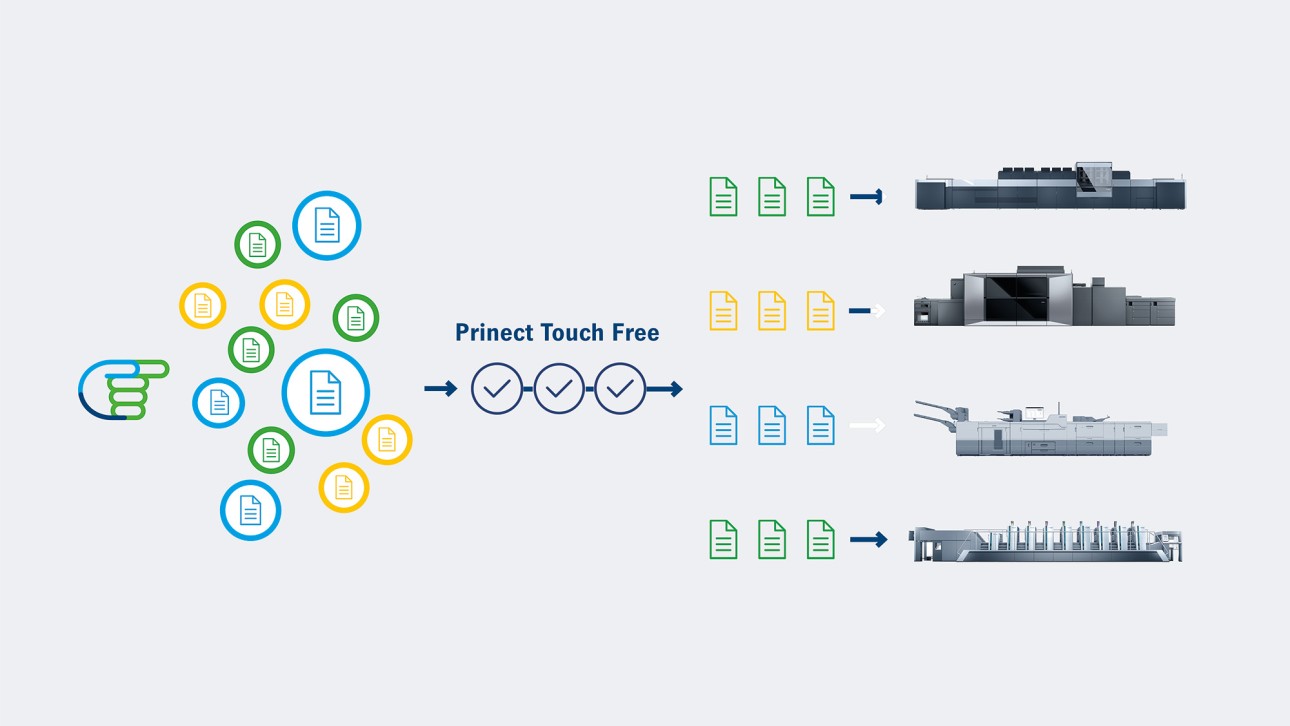
The new AI-driven Prinect Touch Free workflow brings together HEIDELBERG’s digital ecosystem.